
Prominent Figures of the Kerala Church-77
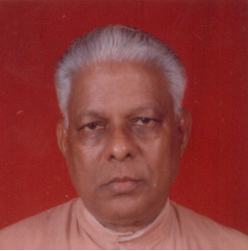
Geevarghese Mar Timotheos
“Being a Metropolitan is a heavy responsibility. It becomes easier to bear this cross when you, my beloved people, support me like Simon and comfort me like Veronica.” These are the words spoken by Geevarghese Mar Timotheos during his response speech at his Metropolitan consecration. It is a reality that, as the father desired and prayed, all the people of the diocese supported and comforted Mar Timotheos in his burden.
Accepting the motto “In Your Word, I will cast my net,” Geevarghese Mar Timotheos took charge as the fifth bishop of the Thiruvalla diocese on February 2, 1928, born into the family of Mr. Jacob and Mrs. Annamma in Chundavala, Ayarkunnam Panchayat, Kottayam district. After receiving the priesthood in 1928, his father, Mr. Jacob, served as the vicar at the Vettikkal Church under the Jacobite Patriarchate. The factional disputes and legal cases within the Jacobite Church led him to reflect on the church’s situation. Mr. Jacob had a close relationship with Mar Severios, and after discussions with him, he decided to reunite with the Catholic Church. On June 14, 1940, Mr. Jacob was reconciled with the Catholic Church at the Cherupushpagiri Aramana in Thiruvalla. His family members also joined the Catholic Church. Thus, at the age of twelve, Timotheos also became a member of the Catholic Church. Family and locals affectionately called him “Sunny.” It was actually his elder brother, Vallyappan Varkey, who paid more attention to Sunny than their father, Mr. Jacob. Vallyappan played a crucial role in the spiritual growth of the young boy.
Sunny completed his primary education at Amayannur Government LP School, middle school at Manarcad Itti Memorial School, and high school at K idangoor St. Mary’s School. His parents sent him to study at the Kidangoor School instead of the nearby Jacobite school solely because they wanted him to receive education in a Catholic school. He traveled eight kilometers, crossing the Pannagam river, to reach Kidangoor School, often returning home around 7 PM. Once, while crossing the Meenachil River, he fell into the water but miraculously escaped. Due to the hardships faced in his education, he couldn’t participate in games or enjoy leisure like other children; only the free time was joyful.
Observing the studies at Kidangoor School and the lifestyles and behaviors of the priests and sisters, George interacted with them with great reverence. After completing his tenth-grade exams, he visited the Aramana with his father and met Mar Severios. The bishop affectionately called George and said, “You need not go anywhere else; this is enough.” The authority of his father’s words resonated deeply in George’s heart.
Immediately after passing high school with good marks, he decided to pursue priestly studies. With the blessings of everyone, he joined the Infant Mary Minor Seminary as a theological student in 1943. George grew up sharing the joy of companionship with all. After the Holy Qurbana, he spent a lot of time in devotion to the Mother of God and in prayer with a rosary. George was a role model for his peers. After two years in the minor seminary, Brother George was sent for higher studies to the Candy Paper Seminary. This was during the period of the Second World War when the world was engulfed in suffering. People struggled for food and clothing, and the seminary faced similar difficulties. The seminarians dealt with challenges regarding food, clothing, and healthcare, yet they persevered with a spirit of sacrifice and contentment. The lessons of sacrifice and hardship he would later encounter in priestly life were learned during this training period. Brother George always took the lead in helping others in every situation.Brother George served as the president of the Latin Academy at the seminary and participated in dramas in both Latin and Malayalam. The exemplary life of the holy figures of that time greatly influenced him. After eight years of seminary education, Brother George received priestly ordination from Bishop Glenn in Kandy on August 24, 1953. The following day, he celebrated his first Holy Mass in Kandy. Within six months, he returned home and was appointed as the vicar for the parishes of Kothamangalam and Nellimattam. He continued to serve as an assistant vicar, helping his father, Mr. Jacob, in their own parish. In June 1956, he was appointed as the diocesan finance officer by the venerable Father Zacharias Mar Athanasius. After two years, he was appointed as the rector of the minor seminary in Chundavala. He held that position until 1963, after which he was sent for higher studies to the Gregorian University in Rome. He obtained his degree in theological studies and returned to Thiruvalla in 1967. During his time in Rome, he had the opportunity to visit Pope Paul VI.
In 1967, he was reappointed as the rector of the minor seminary, serving until 1980. Many of the priests in the Thiruvalla and Bathery dioceses are his students from Chundavala. During this period, he served as a vicar in various parishes, including Anchery, Nedumburam, Kallissery, Kanjirathukara, and Paiyappad. He was responsible for constructing the churches in Nedumburam and Paiyappad, as well as the church building in Nedumburam and the cross at Paiyappad. George played a significant role in various social initiatives in Thiruvalla, including ecumenical movements and joint Christmas celebrations. He served as the vice president of the YMCA in Thiruvalla for a long time, which helped him build a broad network of friends.
In 1980, he was appointed as the vicar of St. John’s Cathedral in Thiruvalla, where he served for eight years. Father George successfully planned various projects to enhance the beauty and richness of the cathedral parish. The beautiful and proud St. John’s Auditorium, the magnificent stone cross installed on the west side of the church, the concrete mausoleum with 40 rooms built in the cemetery, the cross situated on the road to the west of the church, and the priests’ residence are all results of George’s efforts. Demonstrating immense compassion for the needy, during his tenure as the cathedral vicar, he built hundreds of houses for the poor. He established a marriage assistance fund for the underprivileged and provided help for healthcare and children’s education whenever possible. He was known across the state as a good preacher and a meditation guru. He meticulously studied any subject before preparing his speeches and class notes.
In the book “Vachana Valayumenth,” published in connection with Mar Timotheos’ 70th anniversary, Peter Kayyal writes: “Even while reflecting on the small events and experiences of life, his words touch the hearts of the listeners when he speaks. There is no cheap verbosity, pride, or showy knowledge in his words. What he offers is the language of the heart. His calm and loving words, humble demeanor, and silent actions imbued with maturity and strength earned him a place in the hearts of thousands. He was a person of purity, broad-heartedness, connection with the poor, and one who combined physical beauty with spiritual vibrancy—a prayerful man, an experienced yogi who tasted the sweetness of culture, someone who loved others and was loved and respected in return, a revered priest who led a life dedicated to serving his community.”
After serving for 18 years as the rector of the seminary and a decade as the cathedral vicar, Isaac Mar Yohannan appointed Brother George as the vicar general of the diocese. Brother George worked tirelessly in Chundavala, receiving accolades from everyoneFollowing the passing of Isaac Mar Yohannan on April 28, 1987, the diocesan priest council convened and elected Mon. Chundavala as the diocesan administrator. He became well-known as a prominent organizer during events such as the burial of the venerable Yohannan Thirumeni, the commemoration of 40-50 days after death, a grand reception given to Cardinal Simon D. Lourdes, the annual celebration of the Malankara Reunion, and various other significant occasions.
On May 19, 1988, an announcement was made in the Thiruvalla Cathedral appointing Mon. George Chundavala as the newly elected bishop of the Thiruvalla diocese. His long-standing presence in Thiruvalla earned him respect and acceptance from everyone, and all sections of society extended their congratulations.
On June 26, 1988, during a devotionally rich ceremony at the Malankara Catholic Church in his home parish of Amayannoor, he received the position of Ramban from the Malankara Archbishop, the venerable Benedict Mar Gregorios. On Saturday, August 6, 1988, a consecration ceremony was held in a pavilion prepared in the St. John’s Church compound in Thiruvalla under the main officiation of Benedict Mar Gregorios. George was the name given to him during his baptism, and he adopted the name Timotheos during the consecration. He took the name Timotheos after the disciple of St. Paul, who is known for his significant role in the early church. The name Timotheos is derived from the Greek words “Thime” and “Theos.”
On May 9, 1989, he visited the Vatican and expressed his loyalty and gratitude to Pope John Paul II. During the period from 1993 to 1996, he served as the secretary of the K.C.B.C. and from 1994 to 1998 as the vice president of the Catholic Bishops’ Conference of India. He also served in various capacities such as the chairman of Caritas India, the chairman of the Malankara Church Liturgical Commission, and the chairman of the Family Apostolate under the K.C.B.C. Thirumeni has traveled extensively to places like Rome, Germany, America, Spain, France, Canada, Austria, Switzerland, Belgium, Holland, England, Thailand, the Philippines, and Qatar. He has had the opportunity to meet with presidents and prime ministers of India. In 1997, he participated in a protest in front of the Parliament building as part of the Dalit Christian struggle and was arrested.
After assuming the diocesan presidency in 1988, Thirumeni received the mission to prepare the diocese for the Great Jubilee during the Decade of Evangelization and to spiritually strengthen God’s people for the 21st century. In the book “Vachana Valayumenth,” Father Shebi Koziyadil wrote about this period in a chapter titled “The Golden Era of Thiruvalla Diocese,” noting: “He devised a comprehensive plan for the Decade of Evangelization. This plan was divided into four categories: Biblical Evangelism, Religious Education, Worship Practices, and Social Action. The goal of Biblical Evangelism was to promote Bible study and Bible-centered living. In Religious Education, he focused on the study of faith doctrines, church history, and ecclesiastical studies as key subjects. He aimed to enhance the worship experience through studies on liturgical practices. Social action methods were established through educational promotion, housing construction, and legal education. Each year of the Decade of Evangelization was dedicated to specific themes: 1990 focused on Biblical Evangelism, 1991 on parish community and prayer, 1992 on social welfare initiatives, 1993 on social well-being, 1994 on family renewal, 1995 on renewal of worship life, 1996 on faith growth, 1997 on Jesus Christ as the Redeemer, 1998 on the Holy Spirit, 1999 on God the Father, and 2000 on the Holy Eucharist. Thus, through prayer and action, Thirumeni led the diocese on a path of enlightenment.”
It was His Grace George Mar Timotheos who elevated the Litch Puspagiri Hospital to a medical college and initiated the beautiful renovation of St. John’s Cathedral. His constant desire is for everything to be beautiful and magnificent. Thirumeni has already visited various places including Rome, Germany, America, Spain, France, Canada, Austria, Switzerland, Belgium, Holland, England, Thailand, the Philippines, and Qatar multiple times. He has also had the opportunity to meet with the presidents and prime ministers of India. In 1997, he participated in a protest in front of the Parliament as part of the Dalit Christian struggle and was arrested.
After assuming the diocesan presidency in 1988, Thirumeni received the mission to prepare the diocese’s faithful for the Great Jubilee during the Decade of Evangelization and to spiritually strengthen God’s people for the 21st century. In the book “Vachana Valayumenth,” Father Shebi Koziyadil wrote about the Thiruvalla diocese’s golden era, stating: “He devised a comprehensive plan for the Decade of Evangelization. This plan was divided into four categories: Biblical Evangelism, Religious Education, Worship Practices, and Social Action. The goal of Biblical Evangelism was to promote Bible study and Bible-centered living. In Religious Education, he focused on the study of faith doctrines, church history, and ecclesiastical studies. He aimed to enhance worship experiences through studies on liturgical practices. Social action methods were established through educational promotion, housing construction, and legal education. Each year of the Decade of Evangelization was dedicated to specific themes: 1990 focused on Biblical Evangelism, 1991 on parish community and prayer, 1992 on social welfare initiatives, 1993 on social well-being, 1994 on family renewal, 1995 on renewal of worship life, 1996 on faith growth, 1997 on Jesus Christ as the Redeemer, 1998 on the Holy Spirit, 1999 on God the Father, and 2000 on the Holy Eucharist. Thus, through prayer and action, Thirumeni led the diocese on a path of enlightenment.”
It was also Mar Timotheos who elevated the Litch Puspagiri Hospital to a medical college and marked the beginning of the beautiful renovation of St. John’s Cathedral. Thirumeni has a perpetual desire for everything to be beautiful and splendid. In July 1997, to assist in administrative matters, Thomas Mar Kuriakose appointed Thirumeni as the auxiliary bishop.
In October 2003, a new diocese was established with Muvattupuzha as its center, and Mar Kuriakose, the auxiliary bishop of Thiruvalla, was appointed as its head. Isaac Mar Clemis was designated as the head of the Thiruvalla diocese.


Leave a Reply