

Prominent Figures of the Kerala Church-60
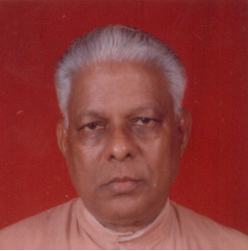
Saitan Joseph
Saitan Joseph, who made a unique mark in the world of theatre by establishing his own distinctive identity and shaping his own style of work, was born on May 16, 1926, in Alappuzha. During World War I, when people were living in fear everywhere, Saitan Joseph’s father, who was residing in Kochi, moved to Alappuzha’s Kanjirathmala to live as a tenant on a small plot of land. He then worked as a laborer at the Guseker’s Rope Factory in Alappuzha. The father succeeded in making new rope blocks using waste material from the factory, which led him to focus on the rope industry. Despite this focus, the artistic talent inherited from his father remained evident, and he continued teaching drama and staging plays at home.
Regarding Saitan Joseph’s entry into the world of theatre, he wrote in his book My Theatre Experiences: “The rhythmic patterns of Malayalam plays based on Bible stories, heard from the courtyard adjacent to the house, captivated me deeply. My passion for art started to be noticed by my father when I used to watch plays from the corner of the courtyard without blinking until I fell asleep. At that time, my father wrote a play with David from the Bible as the central character. A child was needed to act as the young David. One day, my father called me and asked if I could act in the play. Without delay, I nodded enthusiastically, meaning I was very interested. That day, he drew a cross on my neck with his left thumb and led me to the stage. I was 12 years old then. It was my first step into the world of theatre. The fears and anxieties of a novice actor did not trouble me. According to my father, I received the town’s unanimous praise as a good actor through that first play, after which he left theatre and focused on the rope industry.”
Although his father withdrew from theatre, Saitan Joseph did not. He studied at Leo XIII High School in Alappuzha. At that time, he was selected to act as an elephant in a school play conducted in conjunction with the annual function. He gained recognition as an actor through these two performances. During this period, Joseph’s elder brother passed away prematurely, which impacted his studies. He left school in the 8th grade to help his father in his business ventures. Even though he stopped formal education, he continued to stay involved in the world of arts.
Several professional theatre companies invited Saitan Joseph for acting. Many of these companies exploited him without paying any wages. The name Saitan Joseph came about for a reason. His father was known as a good actor. In a slapstick comedy, his father played the dual roles of Mala Khayi and Chekuthan, earning him the name Chekuthan Anthony. When Joseph entered the theatre scene, he was known as Chekuthan Joseph, combining his father’s name. Over time, Chekuthan was dropped, and he became Saitan.
Seeking to escape exploitation by professional theatre companies, Joseph was inspired to start his own theatre company. Despite performing in thirteen plays with a theatre company in Changanassery, the manager did not offer any proper payment, giving just ten rupees out of compulsion. This hardship led him to establish his own theatre company. After consulting with various people, he founded a company named Samathi in an old two-story building in Kanjirathmala, Alappuzha. Initially named Saitan Kala Mandir, it was later renamed Alappuzha Theatres. The company was started in 1960. The foundation for the new theatre company was laid by Sebastian Kunhukunj, a prominent figure in the theatre world.
The first play of the Samathi was A Five-Cent Land by Alappu Mahesh. Saitan Joseph wrote in his book My Theatre Experiences: (Pages 22-23) “This play, which had contemporary political significance, was a protest against the feudal system. There was a specific reason for choosing such a theme for the first play. The theme was my own experience. It was an event I personally witnessed during my childhood. It is still an unhealed wound in my memory. I was six years old at that time. Our family had fled Kochi due to the war and found shelter on a tenant’s land in Kanjirathmala. It was an era when landowners were harsh and demanding. We had to stay outside the tenant’s land without even a patch of land to rest our heads. It was a form of servitude. If the tenant’s expectations were not met, we faced various kinds of punishment. The tenant’s clerks, who were like agents of the landlord, were also granted authority. In those days, it was the tenants’ duty to water the coconut trees. Without modern tools like motors or pumps, water was drawn with a mud pot from the well to water the trees. We had the responsibility of watering the coconut trees.
One day, when the watering was delayed, the tenant’s clerk came home in the evening. While the clerk was arriving, my mother was preparing porridge for the festival. Because of the delay, the clerk barged into the kitchen, removed the pot of porridge, and threw it down. Then he made us leave the house and applied mud to our coconut trees. The scene of being evicted along with my three siblings and my mother, all due to a delay in watering, was heart-wrenching. My mother, with tears streaming down her face, clung to us, not knowing where to go. A neighbor from the next house saw this scene and, after the clerk had left, came to us. She comforted my mother and said, ‘Don’t worry, Lucia. I will take you and the children with me. You can stay with me.’
That experience of being evicted, having our pot of porridge removed, and being driven away due to one day’s delay in watering left a burning scar in my mind. This experience was why I chose the play A Five-Cent Land for my first production.”
The play’s theme, demanding that tenants be given five cents of land as compensation for having no land to rest, was both its opening and closing theme. Adverse conditions led to this situation. Later, when the land reform bill was passed, and a law was enacted to provide three cents of land as a right for tenants, Saitan Joseph thanked God for the play A Five-Cent Land. He was able to buy 60 cents of land as compensation from the place where he was evicted.
The second play of Alappuzha Theatres was Thirty Silver Coins. It was also the first Bible play for the theatre group. The renowned actor Sebastian Kunhukunj Bhagavathar acted in this play. The realization that Bible plays could play a significant role in bringing people closer to God and guiding them on the path of truth inspired Saitan Joseph to take up Bible plays. The play centered around Christ and was a milestone in the growth of Alappuzha Theatres. It was performed on approximately 200 stages and received enthusiastic praise from audiences and religious leaders alike.
Saitan Joseph’s book My Theatre Experiences describes his forty years of engaging and thrilling experiences. He vividly portrays the emotional challenges faced by a theatre group and its leader. Staging a play is inherently challenging, and managing a group of individuals with different temperaments is particularly difficult. Problems arise when transport vehicles break down or face other issues, and when actors do not arrive on time or fail to cooperate. The mental anguish experienced due to shortcomings in a play and the impact of a play not being performed on time on the audience and those who booked it are often beyond words. These are some of the difficulties that Saitan Joseph and Alappuzha Theatres faced, leading to extraordinary experiences.
One significant incident described in the book occurred during a play’s final scene, which depicted Christ’s crucifixion. J. Master, a teacher, played Christ, and his resemblance to Christ in appearance and manner was remarkable. The audience was deeply moved by the realistic portrayal of the crucifixion. After the curtain fell, the audience demanded to see the scene again, chanting “Once more… Once more!” The announcer, Agasthyan, came to the stage and announced that the crucifixion would be shown again, urging everyone to remain silent and not make any noise. This surprised everyone. Saitan Joseph was puzzled about how a scene showing Christ’s death could be performed again. Nevertheless, the scene was repeated, and the audience expressed their satisfaction with prolonged applause. Although the play was a success, the joy of that success was fleeting due to the issues faced.
The play was recognized as a grand success, but the announcer left without paying the agreed compensation. This created a crisis that needed resolution. Payments had to be made for vehicle hire and rented items, and everyone had to be sent back home. Such challenges are part of the journey of a theatre group. One incident involved Chandrika, who had to pledge her jewelry to temporarily escape a similar crisis.
A small disagreement among actors led to a problem where three actors did not show up for a performance, causing chaos as replacements were not arranged. This happened during the performance of Thirty Silver Coins. Saitan Joseph had to take on the roles of Judas and Arimathea Joseph himself, managing all three characters simultaneously. Despite the challenge, he managed to handle the roles effectively and ensure the success of the play.
Another notable experience involved Saitan Joseph performing on stage after having just buried his own daughter. Similarly, when a leading actor’s mother passed away, the actor managed to perform on stage two hours after the funeral. Such commitment and responsibility are highly commendable.
In 1959, following his father’s death, Saitan Joseph took over the full responsibility of the rope factory








Leave a Reply