

Prominent Figures of the Kerala Church-49
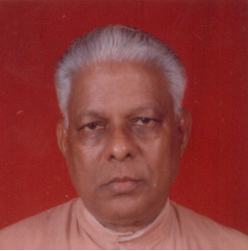
Monsignor Matthew Vellankal
Monsignor Matthew Vellankal is acclaimed in various capacities: as a theologian, researcher, polyglot scholar, lecturer, meditation guide, and social activist, among other roles. He can be described as a multifaceted talent whose life has been enriched by hard work and dedication to service.
Monsignor Matthew Vellankal was born on January 15, 1925, in Ayyavan parish (now Randar), as the third son of Joseph and Anna. During his childhood, he was called Mathew. After receiving education in Kalari, he studied at Ayyavan, Vadakara, and Vazhakulam schools, passing the E.S.L.C. He was notably skilled in sports and games during his school years, winning numerous awards in high jump and pole vault. He delivered a declamation based on Winston Churchill’s speech at a school annual program, earning widespread acclaim. He consistently achieved top positions in his studies.
Despite a strong desire to become a missionary priest from a young age, Mathew was initially discouraged by his family. Eventually, he prepared to join the Ernakulam Minor Seminary, but had to stay home for a year, during which he engaged in intensive labor. As a member of a middle-class farming family, he participated in all types of agricultural work, which sowed the seeds of empathy for the struggles of the working class in him. After this year of waiting, he joined the Ernakulam Minor Seminary and later the Mangalapuzha Seminary for higher studies in 1946. He received the clerical vestments on July 16 of that year. At the seminary, he was involved in various roles such as Prefect, Ceremony Master, Secretary of the Literary Society, Choir Member, and Editor of the “Preshitha Kerala”. He was a leading figure in every educational institution he attended.
On December 21, 1952, he was ordained a priest by Bishop Mathew Kavukattu at Mangalapuzha Seminary, and on the 23rd, he celebrated his first Holy Communion. In his autobiography, Monsignor Vellankal writes, “The exemplary lives of holy men like Aurelius and Zacharias, and their dedication to spiritual growth, greatly assisted my own spiritual development.”
His first appointment was as Assistant Parish Priest at Kottekavu Church in Paravur, a parish known for its large number of workers and poor individuals. He initiated several projects to alleviate unemployment, including a scheme for processing and selling coir from coconut husks and making metal vessels for the labor community. His varied initiatives earned satisfaction from the parish community. He also encouraged the artistic talents and devotional fervor of the children in the parish. Notably, George Paravur, a prominent playwright, stated that Monsignor Vellankal was instrumental in his development.
In October 1954, he was appointed Parish Priest at Purappuzha Church, where he began the construction of the church with full support from the community, even receiving donations of gold ornaments. This work enabled him to obtain permission to study in Rome. After completing the church construction, he left for Rome.
On September 26, 1957, he embarked on a ship from Kochi to Rome, arriving in Naples and then in Rome within hours. He obtained a doctorate from the Gregorian University, one of the most prestigious institutions in Rome, with a thesis focusing on the rise of communism in Kerala. During his stay in Rome, he visited several European countries. Bishop Mathew Potthanam Muthy of Kothamangalam took Monsignor Vellankal as his secretary during his European tour. Monsignor Vellankal had the fortune of meeting and conversing at length with the Pope.
Upon returning to Kerala in 1961, he was appointed as a professor and hostel warden at Muvattupuzha Nirmala College, serving in these roles with distinction for 13 years. During this period, he played a pivotal role in the Catholic Congress as a Bishop Delegate, contributing significantly to the formation of a youth wing and introducing a new style of activism in the organization. He effectively addressed disagreements within the Congress, though he was not involved in the day-to-day operations of the organization.
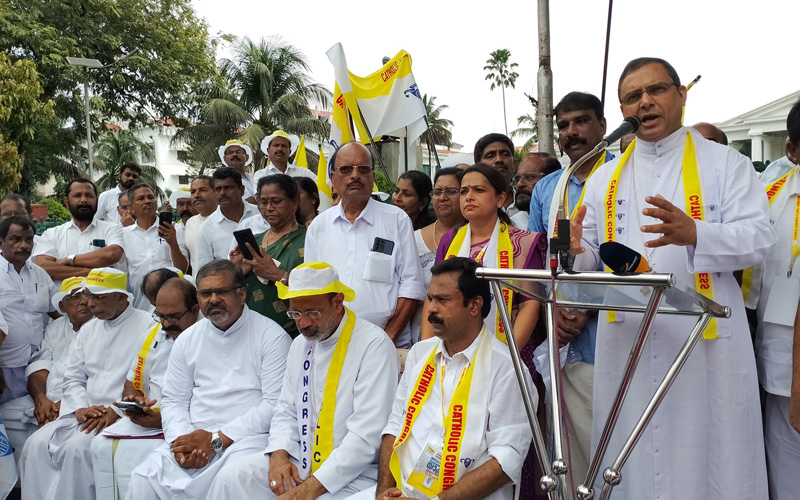
The college education agitation of 1972 was a significant event in Kerala’s history. Initially hesitant, political parties joined the struggle to protect minority rights and the autonomy of private colleges. The All Kerala Catholic Congress led the efforts to mobilize people against the government’s moves. Monsignor Vellankal inaugurated a major assembly called in Ernakulam, delivering a speech that inspired and mobilized the masses, demonstrating his exceptional ability to rally support and overcome political reluctance.
In 1964, during his tenure as Vicar General, he played a key role in the eviction of encroachers from Kuruli Keeri, displacing over 7,000 families. He led efforts to assist the displaced farmers during this period. In 1974, he organized relief efforts for victims of landslides and floods in the high ranges, showcasing his commitment to humanitarian work.
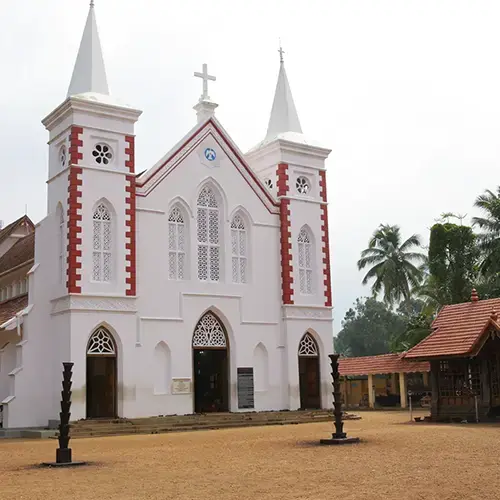
From 1977 to 1990, he served as a professor and spiritual advisor at Vadavathoor Seminary. Even after retirement, his services were sought by several diocesan heads. He accepted the invitation of the Muthuvadi Diocese and was appointed as the parish priest of Kalloor, during which the parish experienced significant growth and development.
Monsignor Vellankal’s contributions extended to the St. Vincent de Paul Society, where he served as National Director for an extended period. He actively participated in national and international conferences, and his presence at the Paris conference of the Society was particularly noteworthy. His efforts included fostering spiritual vitality in dioceses, developing devotional organizations, strengthening student movements like ICAF, and supporting youth organizations.
In 1977, he was honored with the title of Monsignor and was awarded the Mahajubilee Award by the A.K.C.C. He celebrated his 75th birthday and golden jubilee of priesthood with grand celebrations in his parish and Muvattupuzha. In the jubilee year, he published his autobiography titled “In the Path of a Good Shepherd,” which stands out from other autobiographies by focusing on the praise of his collaborators rather than himself.


Leave a Reply