
Prominent Figures of the Kerala Church –33
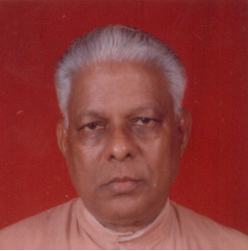
Mar Abraham Mattam
The entry of the Syro-Malabar Church into missionary work in Northern India came after centuries of effort and anticipation. Cardinal Tisserant, the Prefect of the Congregation for the Oriental Churches, played a crucial role in facilitating this. Initially, there was significant resistance to allowing Syrians to undertake missionary activities outside Kerala. However, after the establishment of a self-governing mission center in Chandā in 1962, the progress made there led many to agree that it was appropriate to permit the Syro-Malabar Church to operate in other regions.
A notable priest who supported this cause was Bishop Eugene D’Souza of Bhopal Archdiocese. He, along with four other bishops, informed the Holy See that it was fitting to entrust vast areas in Central and Northern India, which lacked the opportunity to hear the message of Christ, to the Syro-Malabar Church, given its vibrant missionary spirit and numerous vocations.
This pivotal stance led to a significant event in the history of the Church. On July 29, 1968, Pope Paul VI issued a decree establishing three exarchates in Madhya Pradesh. Each of these exarchates was entrusted to a religious congregation from Kerala. The Chandā mission center, which had been started in 1962, was assigned to the C.M.I. (Carmelites of Mary Immaculate). The newly created Ujjain Exarchate was assigned to the Society of St. Thomas Missionaries, while the Satna Exarchate was entrusted to the Vincentian Congregation. The Satna Exarchate was placed under the care of Mar Abraham Mattam of the Vincentian Congregation.
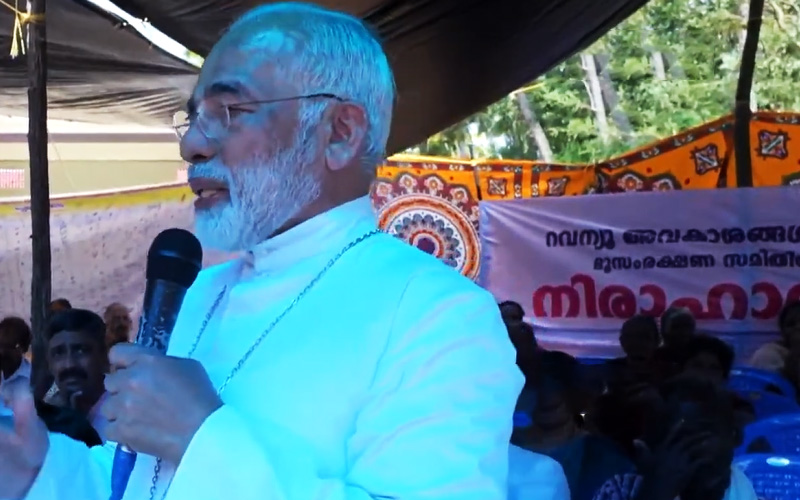
Mar Abraham Mattam was born on November 21, 1922, in Nariyanganam. After his primary education, he joined the Vincentian Seminary in Angamaly. He was ordained a priest on March 15, 1950. When the Satna Exarchate was established in 1968, the Vincentian Congregation was given the responsibility for missionary work there, and Mar Abraham Mattam was appointed as the Exarch.
In 1977, when the Satna Exarchate was elevated to a diocese, Mar Abraham Mattam was consecrated as a bishop. The area was extremely underdeveloped, with little to no infrastructure. Mar Mattam led educational and socio-cultural initiatives in the interior villages of Madhya Pradesh. He not only preached the Gospel but also worked to uplift the community through education.
One of his most remarkable achievements was the establishment of the St. Ephrem Theological College for priestly formation and the Beniya Theological Training Center for sisters. He successfully integrated Eastern Church heritage with Indian cultural elements, advancing the diocese effectively.
Mar Abraham Mattam wrote about the Satna diocese and its local conditions in the publications from the Marthoma Vidyanikethan in Changanassery. His words highlight his commitment to nurturing the Syro-Malabar Church in its identity: “The Satna Exarchate, carved out of six districts from the Jabalpur Diocese, spans an area approximately equal to Kerala’s entire size (45,000 sq. km.). Yet, at that time, there was only one priest for pastoral services and only one mission station in the entire region. The total number of Catholics in the Exarchate was around 500, with other Christian denominations adding up to about 100 more. The region was extremely backward in economic, social, and educational aspects, with a significant portion of the population being illiterate. Outside urban areas, facilities for education or healthcare were minimal. Many villagers lived in abject poverty, and a considerable portion of the population was from lower castes, living in conditions akin to servitude.”
Despite challenging conditions, including poor road infrastructure and long distances, Mar Abraham Mattam endeavored to visit and connect with the Catholics in the main locations, offering them fatherly love and support. The growth of the Satna Diocese stands as a testament to his hard work and dedication. He authored numerous books and articles in various journals, leaving behind a legacy of significant contributions to the Church and society.


Leave a Reply