
Prominent Figures of the Kerala Church-56
Fr. Abraham Adappur S.J.
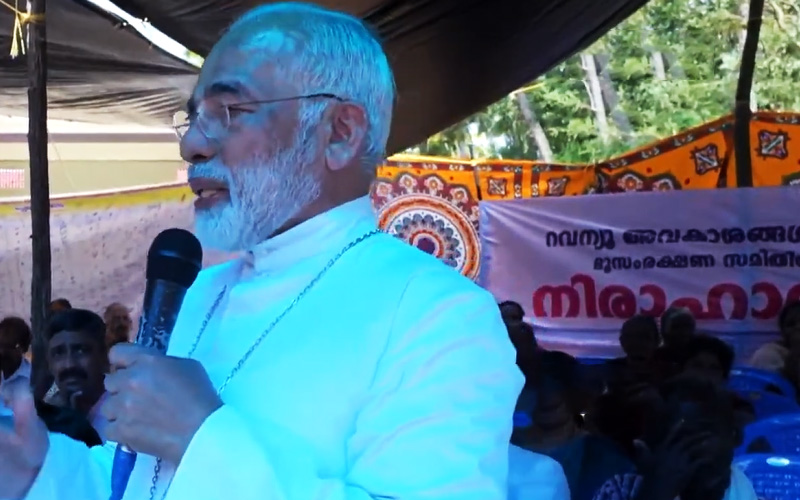
Political movements and popular organizations often appoint an official spokesperson to declare and explain their official positions. However, neither the Catholic Church in India nor the Kerala Church has appointed such a spokesperson. Nevertheless, there is one person who is widely recognized as the Church’s official spokesperson by Indians, particularly Keralites. This individual is Fr. Abraham Adappur S.J. Although not officially designated as the Church’s spokesperson, Fr. Adappur’s responses are accepted and appreciated by the Church leadership and others involved.
Fr. Abraham Adappur, known affectionately as Adappurachan, was born on January 8, 1926, in the Adappur family in Arakkuzha, near Muvattupuzha. His parents were John and Mariam. His mother, Mariam, was a member of the Kannathuzhi branch of the Arakkuzha Mathekka family. His early education took place at various schools, including St. Mary’s School in Arakkuzha, Vazhakkulam, and Infant Jesus School.
After completing his school education, Fr. Adappur joined the Jesuit Order in 1944. He studied philosophy at St. Aloysius College in Mangalore. According to an article by Fr. Gijo Payappalli, Fr. Adappur ventured into literature while studying at St. Aloysius College. The college’s chapel featured biblical artwork created by Brother Antonio Moscheni S.J., and Fr. Adappur wrote about these artworks in a series of articles published by the prominent newspaper Matrubhumi, with the support of the art critic and architect M.V. Dev.
After his studies in Mangalore, Fr. Adappur completed his theological education at De Nobili College in Pune and was ordained a priest on March 19, 1950. Following his ordination, he was involved in Church activities at the Shantiniketan Ashram in Thiruvalla for a year. In September 1962, he went to Rome, where he was appointed as the Regional Secretary under the Jesuit Superior General. This was during the Second Vatican Council, a significant period of reform in the Church. Over the next five years, he wrote extensively on the main themes and documents of the Council, contributing to the Matrubhumi newspaper.
Fr. Adappur’s writings on various critical Church events have been given significant attention by Matrubhumi. His work on the Second Vatican Council and his research on the Church’s responses to contemporary issues highlight his deep engagement with Church matters. Despite facing language barriers, he provided pastoral care in various regions of the northeast, including working with orphaned children and visiting hospitals and local institutions.
He has also made significant contributions to interfaith dialogue and cultural studies. Fr. Adappur has earned degrees in psychology from Marquette University in the USA and a doctorate in theology from the University of Strasbourg in France. His research paper, “Cultured Crisis in India and the West,” published in book form, examines cultural activities in both Western and Indian contexts.
Fr. Adappur is known for his strong stance against anti-Church movements. His writings, such as his responses to controversial plays and academic content, have sparked significant discussions. His books include “The Last Temptation of Christ,” which critiques the portrayal of Christ in certain academic contexts, and “The Crisis of Communism,” which analyzes the failures of communism and its impact on human values.
Fr. Adappur’s contributions extend beyond literature to public speaking and education. He continues to be active in giving lectures and participating in various academic and religious forums. His work has been recognized with numerous awards, including the KCBC Humanistic Literary Award, the Christava Samskarika Vedi Award, the AKCC Literary Award, and the Paul Kakkassery Award.
In summary, Fr. Abraham Adappur S.J. stands out as a prominent figure in both the religious and literary domains, known for his articulate voice on Church matters, his contributions to theological and cultural studies, and his active role in public discourse.



Leave a Reply